NDA Access for Screenplays: Implementing In-Line Confidentiality Gates
Before sharing an unproduced screenplay, production companies frequently require recipients to execute a Non-Disclosure Agreement (NDA). In high-budget feature development and prestige television, an unreleased script leak can disrupt financing, compromise casting exclusivity, or spoil critical plot twists.
However, traditional NDA workflows often stall creative momentum. Sending a standalone legal PDF via DocuSign or physical mail introduces bureaucratic friction, leading talent representatives and producers to deprioritize the read.
This guide details how to implement an in-line NDA gate that enforces legal confidentiality directly within the document-access sequence without stalling review timelines.
The Operational Dilemma: Friction vs. Protection
Entertainment legal departments and creative executives often find themselves in conflict regarding NDA requirements:
flowchart LR
    A[Traditional Offline Workflow] --> B[Draft NDA via Legal]
    B --> C[Send PDF Attachment to Agent]
    C --> D[Agent Passes to Legal Dept]
    D --> E[Wait Days or Weeks for Signature]
    E --> F[Send Screenplay PDF Uncontrolled]

    G[Modern In-Line Gated Workflow] --> H[Create Protected Document Link]
    H --> I[Embed In-Line Confidentiality Terms]
    I --> J[Reviewer Verifies Email & Accepts Terms in 30 Seconds]
    J --> K[Screenplay Unlocks in Secure Viewer]
Why Traditional Workflows Break Down
- Review Delays: High-profile producers and actors receive dozens of scripts weekly. A request to route an NDA through an external agency legal department can delay reading by two to four weeks.
- Disconnected Custody: Even when a paper NDA is signed, the subsequent script delivery is often handled via an ordinary email attachment. The legal agreement exists in one system, while document delivery remains completely unmonitored.
- Execution Gaps: Submissions often proceed without an executed NDA simply because “the meeting is tomorrow morning and legal hasn’t cleared the paperwork yet.”
How In-Line NDA Gating Operates
An in-line NDA gate embeds legal acknowledgement directly into the viewing session. The document viewer acts as a conditional gatekeeper:
- Link Navigation: The recipient clicks the secure screenplay link.
- Identification: The viewer verifies their email address and enters the document password (if configured).
- Agreement Presentation: Before a single scene heading renders, the recipient is presented with the confidentiality agreement text.
- Active Acknowledgement: The recipient reviews the terms, types their legal name or checks the acknowledgement box, and clicks Accept Agreement.
- Session Unlocking: The viewer decodes and displays the watermarked screenplay immediately.
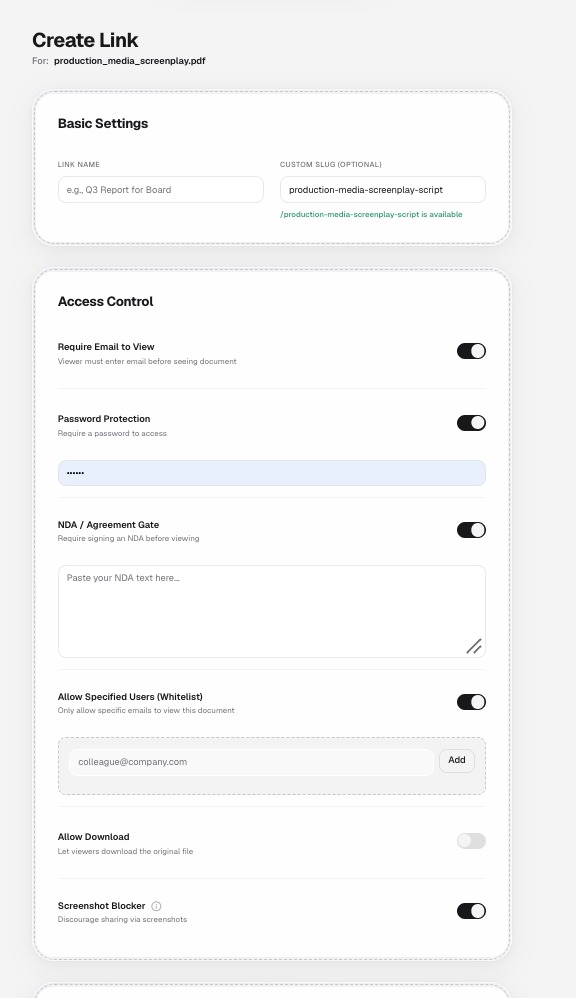 Figure 1: Activating the in-line NDA / Agreement Gate within the document sharing settings drawer.
Elements of an Audit-Ready Digital NDA Record
For an in-line confidentiality agreement to provide genuine legal utility, the document platform must capture an immutable telemetry record at the moment of acceptance.
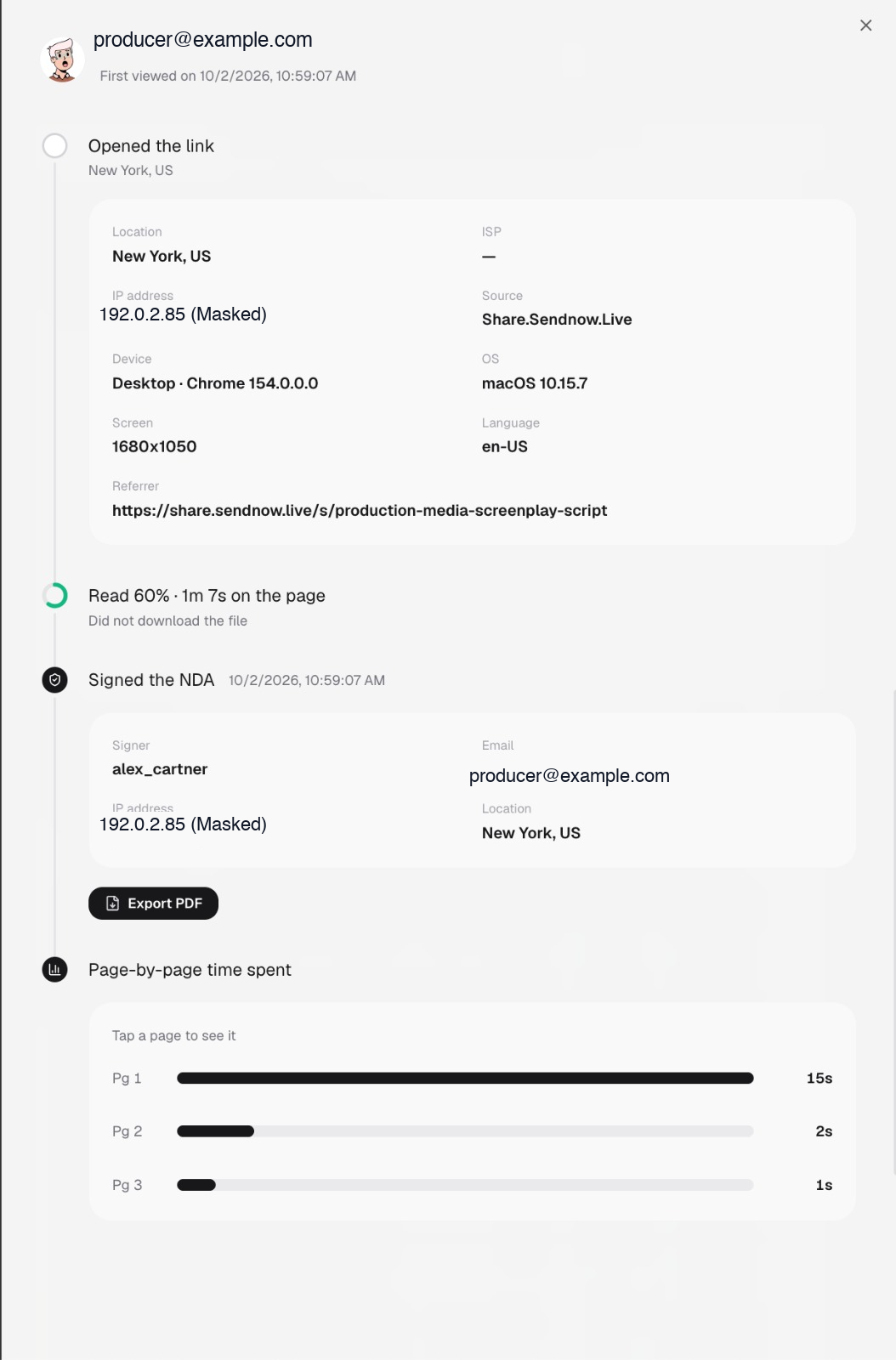 Figure 2: Comprehensive session record showing exact timestamp, verified email, signer name, masked IP address, and acceptance state.
Essential Data Fields for the Audit Trail
A defensible audit log should record:
- Signer Identity: Full name entered by the recipient along with their verified email address.
- Precise Timestamp: Standardized UTC timestamp marking the exact second of acceptance.
- Network Metadata: IP address (masked for privacy compliance where applicable) and geographic location.
- Client Fingerprint: Browser version, operating system, device family, and screen resolution.
- Document Version Hash: The cryptographic hash of the specific screenplay draft displayed during acceptance.
- Exportable PDF Proof: Capability to download a formal certificate of acceptance with the underlying terms embedded.
Best Practices for Screenplay NDA Terms
When authoring in-line confidentiality terms for screenplay distribution, entertainment attorneys typically focus on five critical clauses:
- Strict Non-Disclosure of Story Elements: Clear prohibition against disclosing premise, character details, dialogue, plot outlines, or ending beats to any third party or press outlet.
- Non-Circumvention & Proprietary Rights: Explicit affirmation that all ideas, characters, and trademarks remain the sole property of the production company or screenwriter.
- Prohibition of Digital Redistribution: Explicit restriction against extracting, re-hosting, screen-capturing, or feeding the text into generative AI training corpora.
- Term of Confidentiality: Typically defined as either a multi-year duration (e.g., 2–5 years) or until the motion picture is commercially released in theaters or on a streaming service.
- No Implied Obligation: Confirmation that receipt and review of the script creates no obligation to enter into a production agreement, option contract, or creative partnership.
Legal Considerations: Enforceability of In-Line Agreements
Courts in major entertainment jurisdictions (including California and New York) routinely evaluate digital agreements under clickwrap jurisprudence. To maximize enforceability:
- Clear Notice: The agreement text must be prominently displayed before access is granted, not hidden behind an obscure hyperlink.
- Affirmative Action: The recipient must be required to take an active affirmative step (clicking a distinct button such as “I Agree & Unlock Screenplay”) rather than relying on passive browsewrap assumptions.
- Record Retention: The sender must maintain durable records of the agreement version, timestamp, and user identity.
Related Reading
- Protecting Screenplay PDFs — Fundamental document security and access controls.
- Screenplay Watermarking — Dynamic attribution for external viewers.
- Screenplay Reader Analytics — Auditing session engagement after NDA execution.
- Screenplay Security Checklist — Verification protocols prior to sharing.